SKU: 12837171769
särmä tst tarp m05 woodland camo

särmä tst tarp m05 woodland camo Särmä TST L4 Recon Smock (Old Version) – Varusteleka

Sale price$24.76 Regular price$27.51
Save 10%

Pay in installments of $6.88 with ShopPay, AfterPay and Klarna

Shipping Estimate
USA
  • USA
  • CAN

Ships within 48 hours · Estimated delivery Oct 17 - Oct 22

Promo Codes Available:

For Your Every Summer RSVP, with Code: SUMMER15

Description

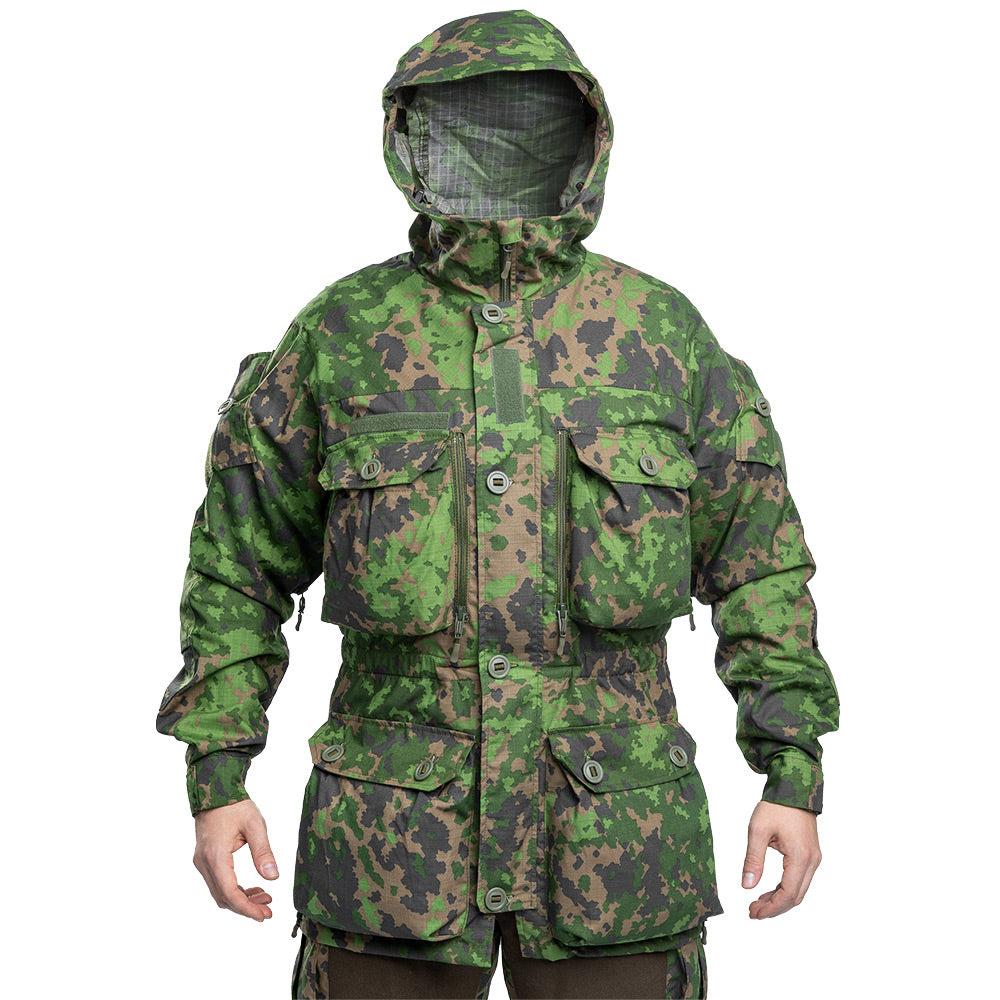
särmä tst tarp m05 woodland camo Särmä TST L4 Recon Smock (Old Version) – VarustelekaA serious forest jacket for tough adventures especially suitable for recon, scouts, and other self sufficient travelers! The fabric of the Recon Smock is not windproof, as this jacket is designed for maximum breathability during high tempo movement however, its spacious cut also allows for the use of warm base and mid layers as needed. This product was made according to the old size chart thats why its now sold at a clearance price! Ventilation

A serious forest jacket for tough adventures – especially suitable for recon, scouts, and other self-sufficient travelers! The fabric of the Recon Smock is not windproof, as this jacket is designed for maximum breathability during high-tempo movement – however, its spacious cut also allows for the use of warm base and mid-layers as needed.

This product was made according to the old size chart – that’s why it’s now sold at a clearance price!
  • Ventilation zippers and breathable materials – comfort even during more intense activities
  • Abundant pocket space – plenty of storage and organizational possibilities
  • Excellent adjustments for your body shape

Features

The Recon Smock features a two-way zipper closure with button flap at the front. Additionally, there are two-way ventilation zippers in the armpits to regulate heat. The jacket is also equipped with hook-and-loop patch panels for name tags, rank insignias, and sleeve patches.

Adjustments and Cut

  • Generous fit, accommodating warm clothing underneath
  • Adjustable hood compatible with helmets
  • Shaped and Cordura-reinforced elbows with pad pockets (we recommend CPE inserts)
  • Hook-and-loop adjustments at cuffs
  • Wide elastic adjustment band at the waist and drawstring at the hem

Thanks to its spacious cut, plenty of warm clothing can be worn under the smock, even a lightweight protective vest, expanding its usability to various situations. Under the Recon Smock, you can fit, if necessary, for example, the Särmä TST L3 Thermal Jacket or a similarly sized Varusteleka Woolshell Jacket.

Twelve Pockets

The pocket arrangement is also essential for a smock. There should be plenty of them, large and small – in this jacket, you can carry your needs for 24 hours, such as food, water, lightweight shelter, first aid supplies, and so on. And this jacket has pockets aplenty:

  • Two sleeve pockets with button and hook-and-loop closure
  • Two button-flap chest pockets
  • Two zippered chest pockets
  • Two button-flap waist pockets
  • Two zippered waist pockets
  • One button-flap rear pocket divided into three compartments
  • One zippered rear pocket

The sleeve pockets close with hook-and-loop and/or buttons: buttons are quiet and slow, hook-and-loop is quick and noisy. By covering the hook-and-loop fasteners, you can use only the buttons quietly. On the front of the jacket, there are four large button-closed pockets; these can accommodate larger items. Behind these large pockets are flat zipper pockets built into the jacket's lining; these also serve as ventilation openings!

At the back hem, there is a large button-closed pocket whose interior can be divided into three compartments with removable partitions; this can accommodate, for example, a tarp and warm clothing. Inside the back hem, there is also a zippered pocket built into the lining, opening at both ends with vertical zippers; this can accommodate even a larger map.

Wax your smock! The main fabric is not windproof or that waterproof either, but it's very breathable. For extra protection we recommend treating your smock with Varusteleka fabric wax, a very effective trick!

L4 – Field Wear

The fourth layer of our clothing system could be regarded as "standard camouflage dress". L4 clothing offers protection against the outside world through camouflage and abrasion resistance. These garments are designed for minimal thermal load for effective layering. Camouflage prints and visible accessories are 100% NIR compliant.

Take a look at our Varusteleka Clothing System!

Made in the EU

These are made in Poland by Unifeq.

Shipping Notes
  • Free Standard Shipping on $100+ Orders to the USA.
  • Except Preorder products are shipped in 48 hours.
  • Delivery to the USA:
  1. Standard Shipping : 3-10 business days
  • If time is of the essence, please consider selecting expedited delivery for faster service.
Exchange/Return Notes
  • We offer a 30-day return/exchange service after receiving.
  • Final sale items are not eligible for returns or exchanges.
  • To process your return/exchange, please contact us at [email protected]
  • Please click here for more details>>> Return & Exchange Policy
SKU: 12837171769

Discover Niche Categories That Outsell särmä tst tarp m05 woodland camo

Top-Converting Item to Boost Your Average Order

4.5 ★★★★★
Based on 11 reviews
Sort
Highest Rating
Newest First
Oldest First
Product Reviews
R
Verified Purchase
Rod Sullivan
Charlottesville, US
★★★★★ 5
Like Having an Expert Looking over Your Shoulder
I am a law professor who spent 25 years as a Plaintiff's lawyer before deciding to teach. I've been before the U.S. Circuit Courts of Appeal many times and state appellate courts a few times. One caveat to consider: I expect to be arguing before the United States Supreme Court in the future. I hesitate to be too ebullient, lest you think that I'm trying to curry favor. However, I think that this book is great. Why do I recommend it? First, it is short. This book will accomplish much of what other books try to teach about advocacy, but in many fewer pages. Secondly, it is practical. It teaches writing skills, speaking skills, and how to be persuasive with limited time. Finally, it is not just for lawyers. Anyone trying to be persuasive can apply the same skills to other situations. For those of you who are politically opposed to Justice Scalia (which, believe it or not, includes some law professors)this is a joint effort by Garner and Scalia, and they frequently disagree. Hearing both sides of the argument on how to write or speak persuasively will help you decide how you want to present your arguments. How do my political opinions and Justice Scalia's opinions mesh? Can I be fair? I think so. He's a Federalist, I consider myself an Anti-Federalist. He as supporter of administrative delegation, I think delegation of congressional responsibilities to administrative agencies is congressional abdication. In short, I'm not recommending this book because Justice Scalia and I agree on policy, because on many policy matters we don't. I'm recommending it because I think it will help you. You wont be disappointed with the book.
WAS THIS REVIEW HELPFUL?YesReportShare
Reviewed in the United States on January 29, 2009
X
Verified Purchase
xiwaeo
Houston, US
★★★★★ 5
Great Read
Great book, I enjoyed reading it. I am non-lawyer so I spent time having to read and re-read sentences and paragraphs but darn good book. Highly recommend it. Sometimes a person can be in discussion with an official, doctor, lawyer, cop ..whatever--it helps to remember arguments made in this book. Most folks just try to explain a situation, heaven forbid standing in front of a court or judge in a legal matter. But, this type of reading builds confidence, a strong vocabulary and so forth. It matters most trying to persuade a person or an institution..just winning, making your point in a clear coherent and cognizant way. This book can teach you these things.
WAS THIS REVIEW HELPFUL?YesReportShare
Reviewed in the United States on June 20, 2025
J
Verified Purchase
Jeff Wade
Port Orchard, US
★★★★★ 4
You don't have to like Justice Scalia to like his book.
Perhaps an appellate brief that you wrote would have been perfect if only the judge had read it. The lesson you learned, hopefully, was that there is no guarantee that a judge will read your brief. The lesson you can learn from "Making Your Case" is how to write so that the judges will read what you wrote - preferably before your oral argument. Writing in a quite candid, lucid and entertaining style, Scalia and Garner serve up tips that even the most experienced lawyers can learn from. If you find yourself approaching the court's word limit, for example, you may be minimizing the chances of having your brief read, as judges really do favor brevity. How do you write for a court that is notoriously dismissive of higher court precedents? How do you best respond to a judge who asks whether you would be content with a remand? These and other critical questions are addressed simply yet insightfully. If your legal education stressed the IRAC approach (Issue, Rule, Application, Conclusion), Scalia and Garner take you a step further by stressing a syllogistic approach. Even if you have already been exposed to all the best ideas about persuading appellate judges, you are still likely to gain much rom reading "Making Your Case" because the authors organize all those ideas in a way that makes them much easier to remember and keep them in mind as you prepare your written and oral arguments. Justice Scalia calls his approach to legal reasoning and argument "textualism," which I understand to mean that his decisions are driven by the language of the law and of the case. My impression from reading many of his decisions is that he is often driven by ideology, so I can't quite square his book with his decisions. I also question the book's fundamental statement that the overriding objective of a brief is to make the court's job easier, as I prefer to write primarily for the purpose of winning the case. My criticisms of "Making Your Case" are miniscule compared to those thrown at it by Richard Posner. But although I find Judge Posner's decisions generally more fair than those of Justice Scalia, I prefer the clarity of Justice Scalia's writing - especially when he teams up with Bryan Garmer. Judge Posner notwithstanding, Scalia and Garner have put together a gem that is likely to prove invaluable for law students as well as for trial and appellate lawyers who are still interested in improving their game. If you fall into either category, buy this book, read it two or three times, and then keep it handy as a reference. It should help you make your case.
WAS THIS REVIEW HELPFUL?YesReportShare
Reviewed in the United States on December 18, 2012
F
Verified Purchase
Fig&Friday
Boise, US
★★★★★ 5
A Great Read... (for those in the legal field)
A great gift for those in the legal field. We ordered several for gifts throughout the year.. Made a great little gift basket with a bottle of whiskey :)
WAS THIS REVIEW HELPFUL?YesReportShare
Reviewed in the United States on January 20, 2026
R
Verified Purchase
rbnn
Phoenix, US
★★★★★ 5
Elegant, useful
Simply the best book on legal persuasive writing ever written. Interesting, useful, fun, full of great anecdotes. Terrific discussion of statutory interpretation. Great references to scholarly classical treatises on rhetoric. This book is wonderful both for its analysis of oral argument and for its discussion of written forms of persuasion, like briefs. I wish I had had it earlier. My only complaint is the same one I have with virtually all modern style manuals: they advocate a simplistic prose style, characterized by short, conversational sentences, avoiding unusual words, eschewing Latin phrases. But I personally often find prose that breaks these rules a refreshing change. I enjoy reading a word or phrase I rarely see but that is perfectly chosen. And I enjoy learning new words or phrases. This book would condemn two of the greatest legal prose stylists out there: John Marshall and Learned Hand, both of whose opinions often contained sentences that would not work so well conversationally, that were full of long, convoluted sentences and classical allusions. My sense is that in this joint work Justice Scalia, who can write rich and interesting prose, pushed back against some of the simplifying strictures of his co-author. Furthermore, I think that often too much emphasis on simple words and sentences serves to make more complex ideas too difficult to express or to understand. Thus, the book (like most books) argues against "jargon," but jargon, once learned, is often a much clearer way of expressing something than a rephrasing. And the Roe v. Wade anecdote is great! It explains a lot... In any case, I am hardly qualified to criticize Justice Scalia, whose writing is far beyond my own. Anyway, this is a great book.
WAS THIS REVIEW HELPFUL?YesReportShare
Reviewed in the United States on May 7, 2008

recommand products